
TrialMind for Competitive & Portfolio Intelligence
Track competing trials, with sources
TrialMind reads trial registries, publications, and conference abstracts directly, and links every claim to its source.
- Abstracts analyzed from the American Association for Cancer Research (AACR) 2026 meeting
- 6,7691
- Abstracts analyzed from the American Association for Cancer Research (AACR) 2026 meeting
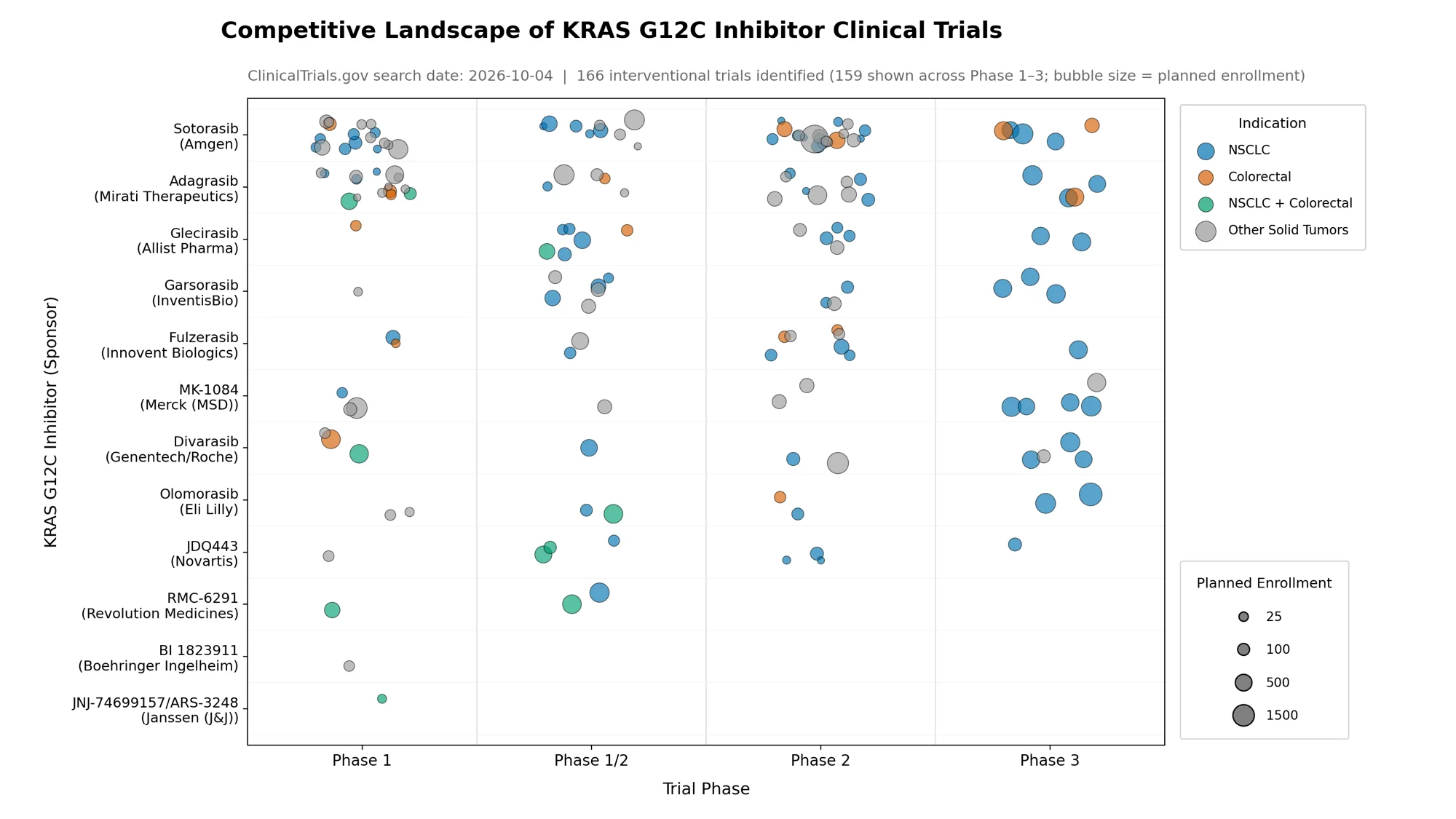
- Trials in an example KRAS G12C landscape, from ClinicalTrials.gov
- 166
- Trials in an example KRAS G12C landscape, from ClinicalTrials.gov
Competitive and portfolio intelligence workflows
Five workflows that use the same collection of primary sources. Every answer includes its citations.
- When it is used
- A competitor's program changes, and the portfolio committee needs a complete overview.
- What it produces
- Trials from ClinicalTrials.gov, the EU Clinical Trials Register (EudraCT), and other registries, by phase, sponsor, and status.
How results are sourced
A source for every claim
Each statement links to the trial record, publication, or abstract it came from.
Primary sources
Protocols, publications, and abstracts are read directly, not through secondary summaries.
No patient data involved
This work uses no patient data and produces no regulated deliverables, so you can start right away.
Technical details
- Data in
- Trial registries (ClinicalTrials.gov, EudraCT, and others), publications, and conference abstracts as presented at major scientific meetings
- Outputs
- Trial landscapes, competitor analysis by author organization, KOL lists, probability-of-success estimates by phase with risk factors, and systematic reviews following the Preferred Reporting Items for Systematic Reviews and Meta-Analyses (PRISMA) guideline
Methods and publications
- A foundation model for human-AI collaboration in medical literature mining (Nature Communications, 2025) — screening accuracy, published and checkable.
- TrialPanorama (2025) — the trial data foundation behind landscape and design questions.
Frequently asked questions
Do we need a validation project or a long IT review to start?
No. Competitive and portfolio intelligence work does not touch patient data or regulated deliverables, so there is no validation project before you start, and GxP-qualified analysis is available if your work moves into regulated use. It is usually the quickest way to start using TrialMind.
Where do the conference abstracts come from?
We process abstracts from the major scientific meetings, so new work is available as it is presented rather than after databases index it. The same collection supports competitor analysis by author organization and key opinion leader discovery.
Can we see the source behind every claim?
Yes. Every statement traces back to the trial record, publication, or abstract it came from, so anyone in a portfolio review can check where a number came from.
How is probability of success calculated?
Our outcome prediction is based on published research, with the method described in peer-reviewed papers. If a funding decision depends on the number, you can examine how it was produced.
Can you answer a custom question, or is this a fixed report?
Custom, per program. Each analysis answers your team's current question rather than following a fixed publication schedule.
How is this different from the reviews our health economics and outcomes research (HEOR) team runs?
Reviews here inform portfolio and R&D strategy. Reviews for payer dossiers are checked for method by health technology assessment (HTA) bodies and belong with HEOR and market access. They are separate pieces of work.
Start with public sources
Explore a question using trial registries, publications, and conference abstracts.
- 1. Abstracts from the AACR Annual Meeting 2026, analyzed by Keiji AI's conference-abstract pipeline. See the AACR 2026 report.